Every object in my studio collection carries a physical memory of the natural world. While some pieces mimic the deep erosion of a mountain stream, others are born from the fluid, rhythmic patterns of our coastlines. This journal entry opens the workshop doors to share the step-by-step evolution of one of the most distinctive sculptural pieces currently resting in the gallery: Fossil & Fiber – Impressed Fish Ceramic and Foraged Pine Needle Vessel.
Pressing the Impression
The journey begins at the raw workbench with a flat slab of stoneware clay. To build a rich, historic surface texture, I intentionally press and stamp a fish motif directly into the soft clay. This creates a deep, debossed impression across the earth, leaving a permanent fossil-like memory trapped inside the grain before the structure is ever formed.
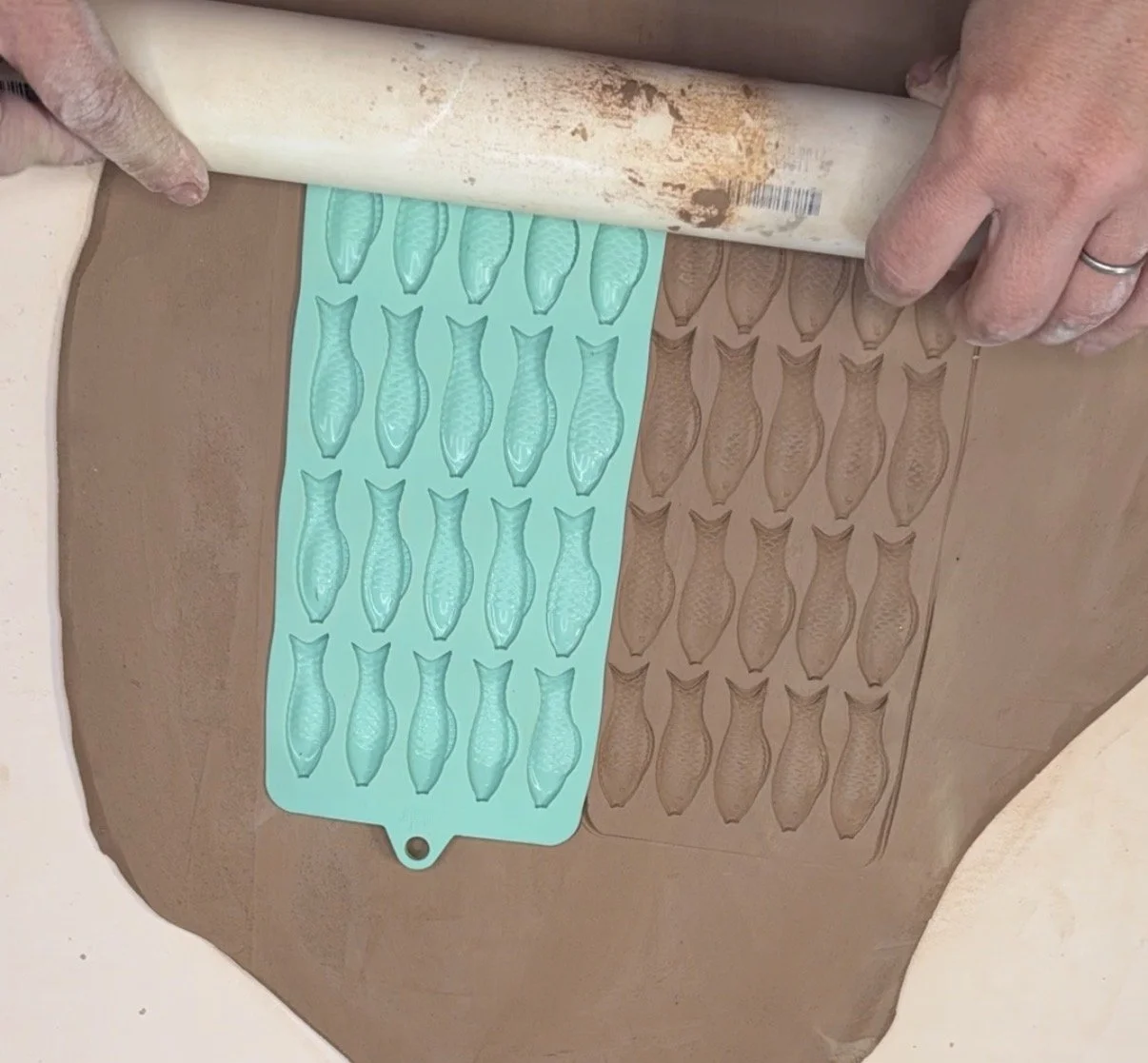
Imprinting the memory: Pressing fish motif into the soft stoneware before shaping the walls.
Drapery over the Mold
Once the texture is locked into the clay, the slab is carefully lifted and draped over a curved plaster mold. Using my hands to smooth and scale the edges, I press the clay flush against the plaster to define its clean, structural bowl silhouette while ensuring the stamped fish impressions remain perfectly crisp and undisturbed on the reverse side.
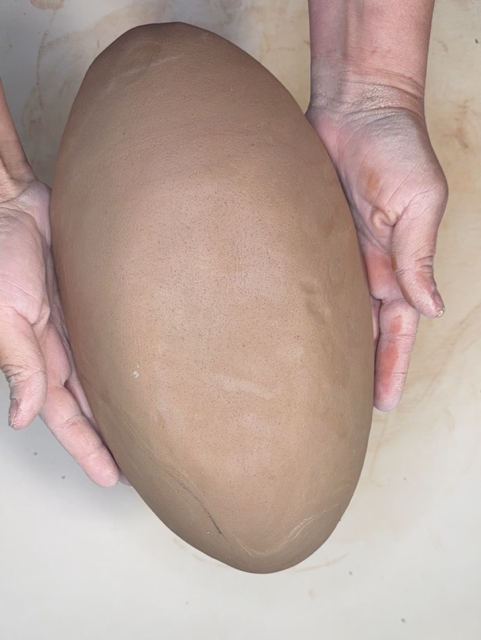
Shaping the form: Draping the textured stoneware over a plaster mold to define the structural contour.
The First Fire
After the shaped vessel slowly air-dries to a bone-dry state, it undergoes its initial journey through the element of fire. Loaded carefully into the studio kiln, the piece is bisque fired, permanently transforming the fragile dried mud into a durable, porous ceramic canvas that is ready to accept glaze.
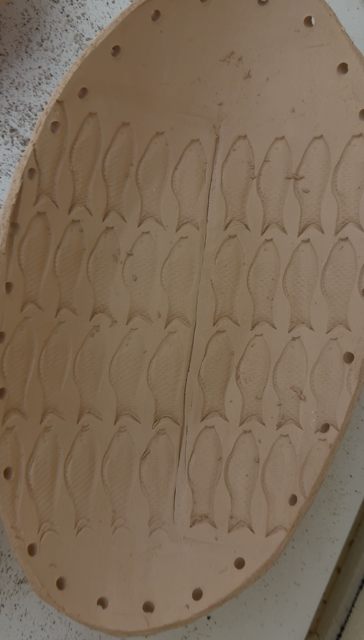
Fused by fire: The vessel post-bisque firing, transformed into a permanent ceramic canvas.
Illuminating the Details
With the bisque canvas ready, the process shifts to meticulous hand-painting. Using a fine brush and rich mineral washes, I carefully paint glaze directly into the interior lines of the stamped fish details. This precise application ensures that during the final high-temperature kiln firing, the pigment pools deeply within the debossed valleys, creating a striking contrast against the raw, unglazed clay body.
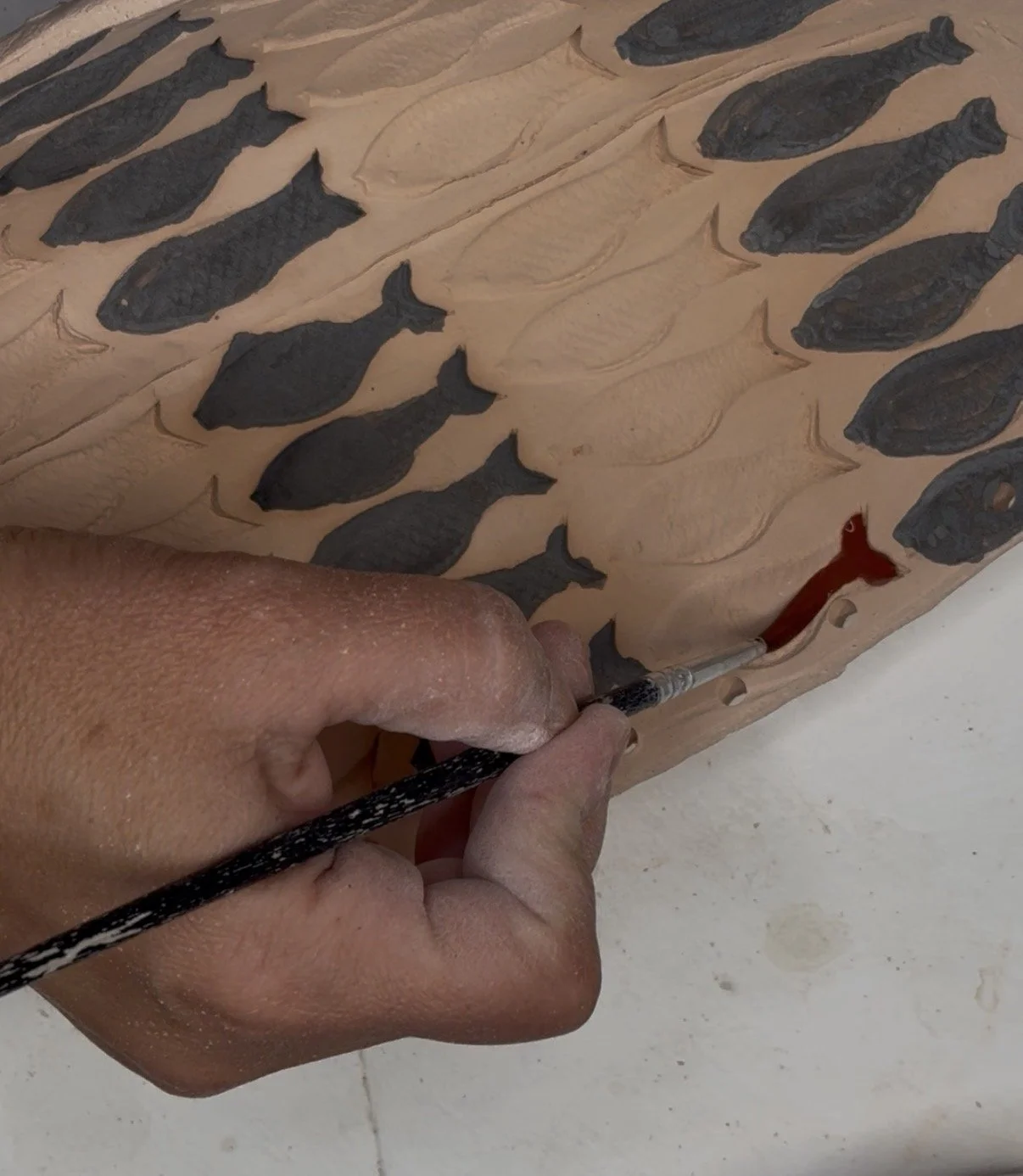
Refining the line: Hand-painting mineral glazes directly into the recessed valleys of the fish motifs.
The Woven Boundary
The final phase requires hours of meditative stillness. Using sun-cured pine needles hand-foraged along local Southern California foothill trails, I begin hand-coiling the rim. Row by row, stitch by stitch, I pull natural waxed thread through the pre-made holes in the ceramic border, anchoring the texture of the forest canopy directly to the ancient, fossilized rhythms of the clay tide below.
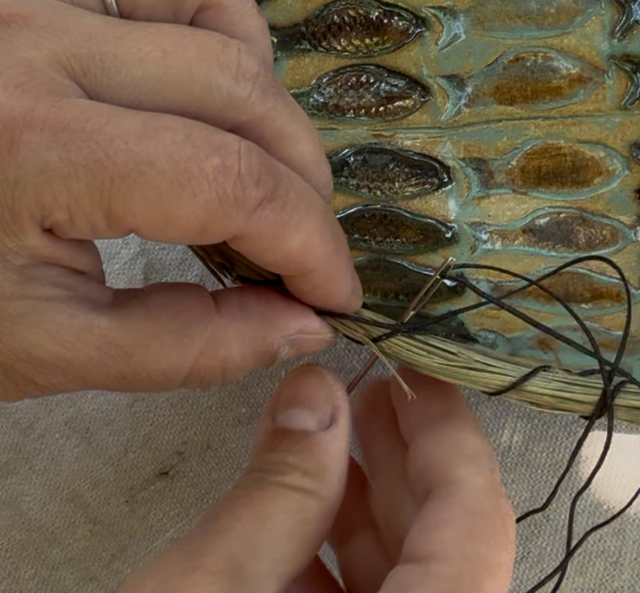
Binding the canopy: Hand-stitching local, foraged California pine needles onto the finished ceramic rim.
The Vessel Blueprint: Origin & Elements
Foraging Site: Foothill trails, Southern California
Clay Medium: Hand-built fine stoneware clay
Surface Treatment: Stamped fish motif
Glaze Detail: Hand-painted interior accent wash
Natural Fiber: Hand-foraged native pine needles
Binding Element: Natural waxed thread
Studio Method: Stamped by hand, draped over a plaster mold, bisque fired, hand-glazed, and hand-coiled over 12 hours
Bring 'Fossil & Fiber' Into Your Space
The completed Fossil & Fiber Vessel is a true testament to slow, multi-disciplinary craftsmanship. You can explore its full dimensions, view alternate gallery angles, or officially adopt it into your private collection right here in the shop.